Skip to content
Free Shipping$250 away
←Back to Collection
Metabolic

NAD+

≥99% HPLC Verified
$100.00/ vial
1
Save to Wishlist

For in vitro laboratory research use only. Not for human or veterinary use. Not evaluated by the FDA. Must be 21+ to purchase.
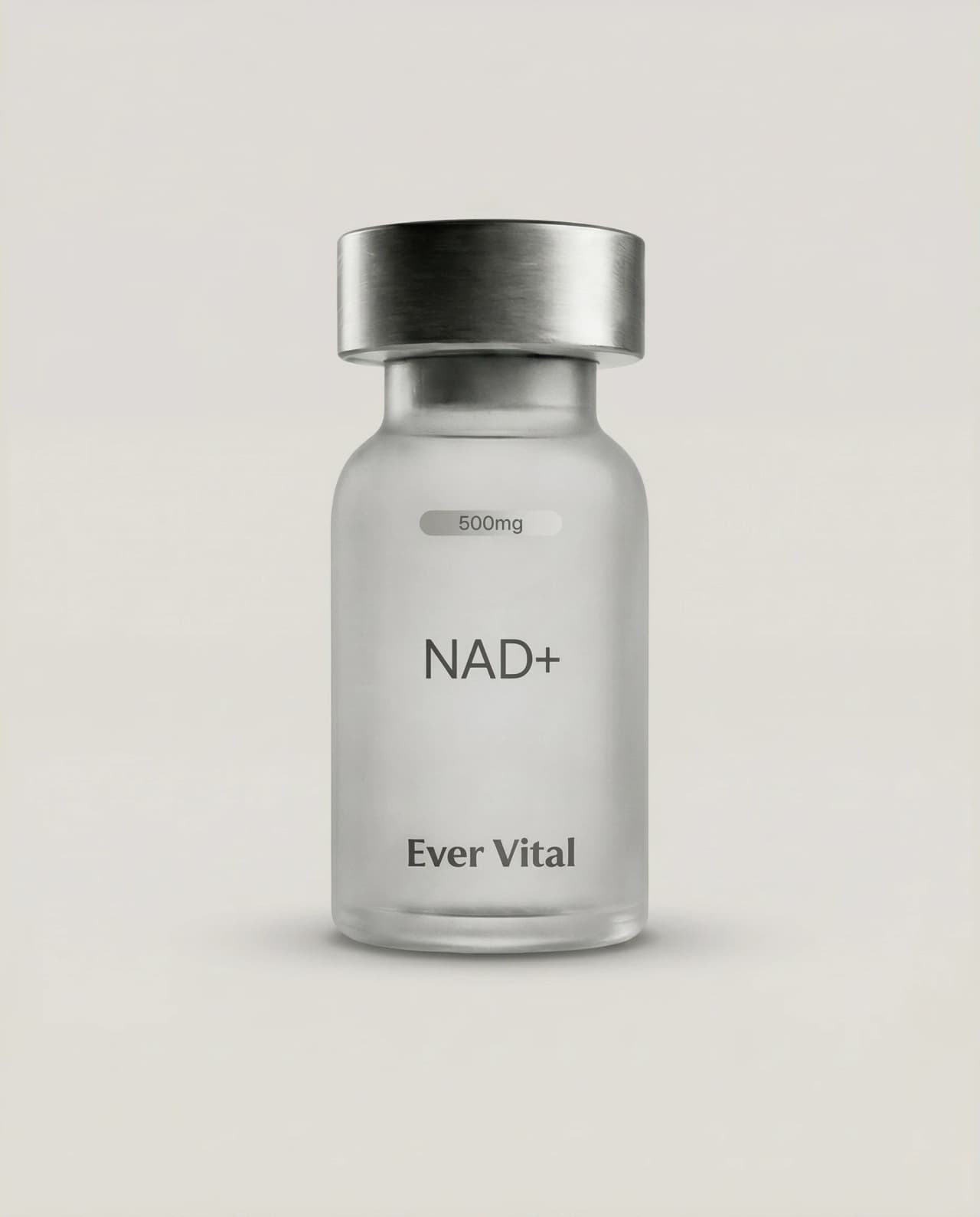
NAD+
CAS Number53-84-9
Molecular FormulaC21H27N7O14P2
Molecular Weight663.43 g/mol (anhydrous free acid)
Purity≥99% (HPLC)
Storage−20°C · Lyophilized
FormLyophilized Powder

NAD+ (nicotinamide adenine dinucleotide) is a dinucleotide coenzyme, not a peptide. Its structure is nicotinamide and adenine joined through phosphate groups. It carries the molecular formula C₂₁H₂₇N₇O₁₄P₂ and a molecular weight of 663.4 g/mol (CAS: 53-84-9). Within cellular metabolism it operates as an essential electron carrier, the role that makes it a common reference compound in metabolic research.

Amino Acid SequenceN/A (Non-peptide compound)
Dinucleotide CoenzymeSirtuins (SIRT1-7)PARP Enzymes

Mechanism of Action

SirtuinsNAD+-dependent deacetylation

NAD+ works as the coenzyme for sirtuin deacetylases, setting protein acetylation status across metabolic pathways.

Cellular EnergyRedox reactions

As a redox cofactor it cycles between oxidized and reduced states through glycolysis, the TCA cycle, and oxidative phosphorylation.

Recommended Storage−20°C · Lyophilized
FormLyophilized (freeze-dried) powder
Temperature-20°C for long-term storage
Light SensitivityProtect from light and moisture
StabilityStable for 12 months when stored properly
NotesHygroscopic compound requiring moisture protection.

What is NAD+?

NAD+ (nicotinamide adenine dinucleotide) is a dinucleotide coenzyme, not a peptide. Its structure is nicotinamide and adenine joined through phosphate groups. It carries the molecular formula C₂₁H₂₇N₇O₁₄P₂ and a molecular weight of 663.4 g/mol (CAS: 53-84-9). Within cellular metabolism it operates as an essential electron carrier, the role that makes it a common reference compound in metabolic research.

Amino Acid Sequence:N/A (Non-peptide compound)
Classification: Dinucleotide CoenzymeSirtuins (SIRT1-7)PARP Enzymes

Specifications

CAS Number53-84-9
Molecular FormulaC21H27N7O14P2
Molecular Weight663.43 g/mol (anhydrous free acid)
Purity≥99% (HPLC verified)
FormLyophilized powder
Storage−20°C · Lyophilized

Mechanism of Action

Sirtuins

NAD+-dependent deacetylation

NAD+ works as the coenzyme for sirtuin deacetylases, setting protein acetylation status across metabolic pathways.

Cellular Energy

Redox reactions

As a redox cofactor it cycles between oxidized and reduced states through glycolysis, the TCA cycle, and oxidative phosphorylation.

Storage & Handling

Temperature:-20°C for long-term storage
Light Sensitivity:Protect from light and moisture
Stability Duration:Stable for 12 months when stored properly
Hygroscopic compound requiring moisture protection.

Related Compounds

MOTS-cEpitalonSS-31

Research Use Only

All compounds are sold strictly for laboratory research use. Not for human use. These products are not drugs, supplements, or food. Statements have not been evaluated by the FDA. Must be 21+ to purchase. This compound is intended exclusively for in vitro laboratory research. Not for human or veterinary use. Not intended to diagnose, treat, cure, or prevent any disease.

Research FAQ

NAD+ FAQ

What is NAD+?

NAD+ (nicotinamide adenine dinucleotide) is a coenzyme made of a nicotinamide nucleotide and an adenine nucleotide joined through their phosphate groups. Ever Vital lists it with molecular formula C21H27N7O14P2, a molecular weight of 663.4 g/mol, and CAS 53-84-9. For research purposes only. Not for human use.

Is NAD+ a peptide?

No. NAD+ is a nucleotide coenzyme with no amino acids or peptide bonds. Ever Vital carries it as a research compound because it is studied in the same metabolic and cellular energy pathways as several catalog peptides, which is why its product page calls it a research compound rather than a peptide.

What role does NAD+ play in cellular research?

NAD+ is the oxidized half of the NAD+/NADH redox pair that carries electrons in glycolysis, the TCA cycle, and mitochondrial respiration. It is also the substrate that sirtuin and PARP enzymes cleave, so in vitro studies use it to probe metabolic signaling, enzyme kinetics, and cellular NAD+ pools.

What purity level does Ever Vital's NAD+ have?

Ever Vital supplies NAD+ at 99%+ purity, verified by third-party HPLC and mass spectrometry analysis. Certificates of Analysis are available upon request.

How is NAD+ supplied?

NAD+ is supplied as a lyophilized powder in sealed research-grade vials, intended for in vitro and laboratory research use only.

Scientific Context

Related Research & Analysis

NAD+

NAD+ in In Vitro Models: Research Context and Assay Considerations

A research overview of how NAD+ is measured and used in cell-free enzyme assays and cell culture, covering pool measurement, NAD+/NADH ratios, consuming enzymes and aging models. For research purposes only.

Read Full Article
NAD+

NAD+ Structure: The Dinucleotide, the Pyrophosphate Bridge, and the NAD+/NADH Redox Couple

NAD+ (nicotinamide adenine dinucleotide) is two nucleotides, nicotinamide mononucleotide and AMP, joined through a pyrophosphate bridge, C₂₁H₂₇N₇O₁₄P₂, 663.4 g/mol. The C4 position of its nicotinamide ring accepts a hydride, which turns NAD+ into NADH and defines the redox couple. A structure-first overview with an NAD+, NADH and NADP+ comparison. For research purposes only.

Read Full Article
NAD+

NAD+ (Nicotinamide Adenine Dinucleotide): Coenzyme Biochemistry and Research Overview

A research overview of NAD+, covering its molecular structure, function as a coenzyme in cellular redox reactions, role as a substrate for sirtuin and PARP enzymes, and its study in cellular aging models. For research purposes only.

Read Full Article