Amino Asylum is the community forum inside Amino Axiom, a free research information and tracking platform. It is where researchers post questions, share papers and compare notes on compounds and methods. It lives at Amino Axiom Amino Asylum. It is a discussion feature only.
The rest of the platform is built around reference material such as a compound library, a glossary and a vendor directory. The forum is the part that is written by people. This walkthrough covers what a research discussion surface offers a longevity, redox and cellular aging researcher, how to read it critically, and where it stops being useful. It does not describe use of any compound.
What does a research forum add that a reference library does not?
A reference library states what is known in a fixed form. A forum surfaces what is being asked right now: which assay is giving inconsistent results, which paper people are arguing about, which identifier keeps being confused. For a researcher it works like a lab-meeting hallway, useful for leads and not for conclusions.
That distinction drives how threads should be read. A library entry has an editorial process behind it. A forum post has an author, a date and an opinion. The value is in the questions it raises and the citations it points to, which the reader then verifies. A thread that sends a researcher to a methods section they had not seen has done its job, regardless of whether anyone in the thread was right.
How should a thread be read critically?
A thread is readable when it states three things: the experimental system, the readout, and the identity of the material. If a post says a compound "worked" without naming a cell type, an assay or a measured quantity, there is nothing to evaluate. If it names them, the claim can be checked against the paper it came from.
A practical reading routine looks for these signals:
The experimental system is named, such as a cell line, a primary culture or a cell-free assay.
The readout is a measured quantity with a method, not an impression.
The material is identified by name and, ideally, by formula or registry number.
A source is given, and the source is a primary publication rather than another post.
Posts that lack these are best treated as prompts for questions. Posts that carry them can be followed upstream. Neither kind is evidence on its own, and nothing in a community thread establishes an outcome for any compound.
What does a NAD+ thread illustrate?
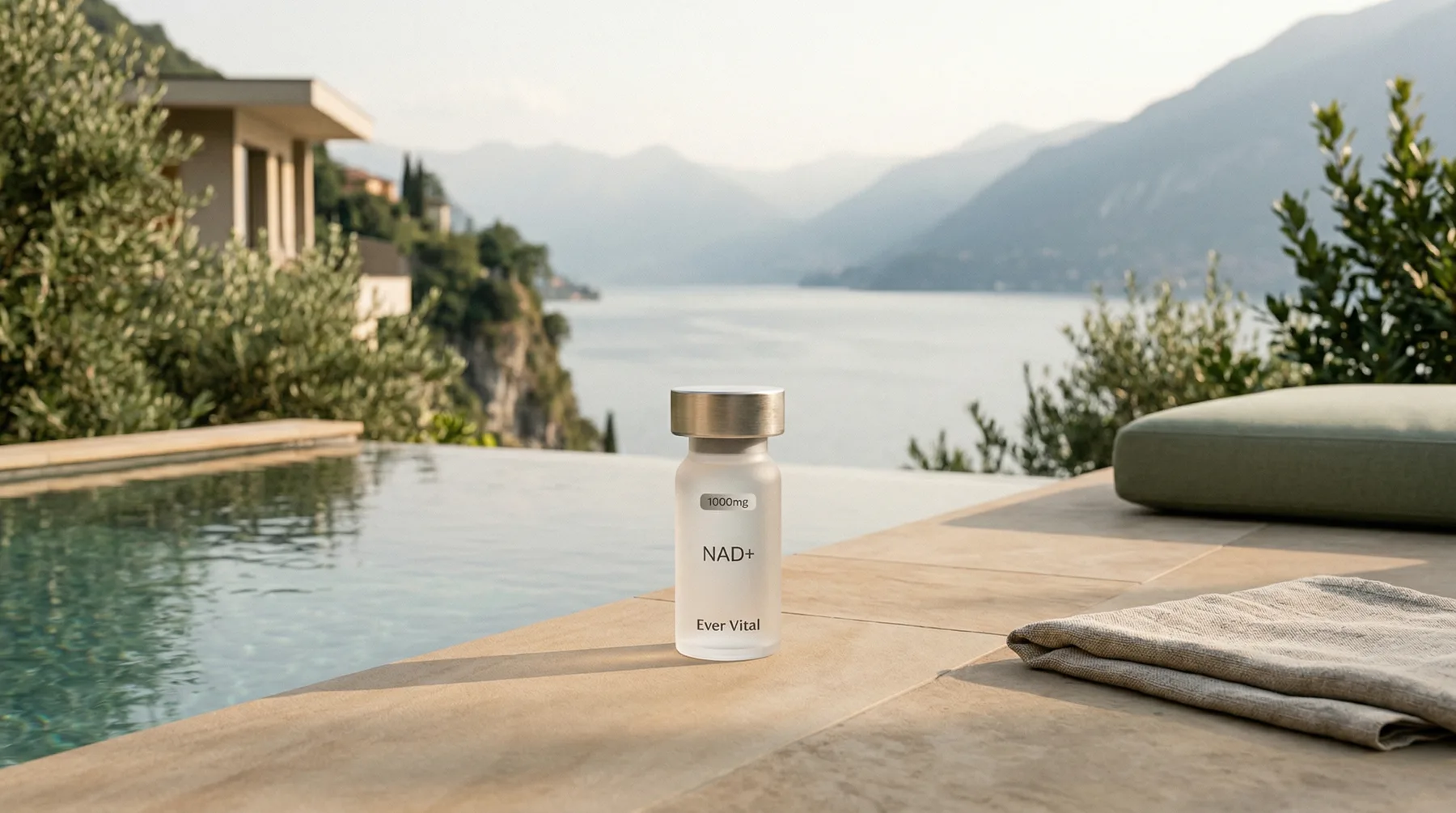
NAD+ is a useful worked example because it is discussed in several overlapping senses. NAD+ is the pyridine dinucleotide coenzyme with the formula C21H27N7O14P2, a molecular weight of 663.43 g/mol (anhydrous free acid) and CAS 53-84-9 in the Ever Vital catalog. In the literature it appears as a redox cofactor, as a substrate for sirtuin and PARP enzymes, and as a measured pool in cell lysates.
Those are three different questions that share one name. A thread that mixes them, for instance a discussion of measuring an NAD+/NADH ratio alongside a discussion of enzyme substrate kinetics, can leave a reader unsure which system is meant. The helpful move is to ask which of the three the poster means, and to pull the matching background. The NAD+ research overview and the article on NAD+ structure and redox chemistry are the kind of primary-adjacent reading a good thread points toward.
What does a MOTS-c thread illustrate?
MOTS-c is a 16-amino-acid peptide encoded in the mitochondrial genome, catalogued with the formula C100H152N28O22S2, a molecular weight of 2174.59 g/mol and CAS 1627580-64-6. It is a newer entrant to the literature than long-established cofactors, and that shapes the discussion around it.
Newer research areas generate more open questions than settled answers, so threads about them tend to be heavy on speculation. A careful reader separates the sequence-level facts, which the identifiers settle, from claims about biology, which depend on the cited studies. Published work describes MOTS-c as a retrograde mitochondrial signal studied in cell models, and the overview at MOTS-c research overview covers that framing. A forum thread that goes beyond what those studies report is a flag to return to the source, not a finding.
What does an SS-31 thread illustrate?
SS-31 is a short synthetic tetrapeptide described in published structural analyses as associating with cardiolipin on the inner mitochondrial membrane. The catalog lists the formula C32H49N9O5, a molecular weight of 639.80 g/mol and CAS 736992-21-5.
SS-31 is a good test of identifier discipline because it is discussed under more than one name. A community discussion can easily blend a development name, a nonproprietary name and a catalog name, and a reader cannot tell whether two posts refer to the same material without a registry number. The habit worth building is to check the formula and CAS in the post against the catalog before treating two threads as being about one molecule. The longer background is in the SS-31 and cardiolipin research overview.
How can the community fit into a research workflow?
A longevity researcher can use the forum as a lead-generation step in four stages, always ending in the primary literature. The routine below is a documentation habit and nothing more.
Start from a specific research question and a shortlist of compounds.
Search the community for threads on those compounds and note the papers, methods and open questions they mention.
For each lead, confirm the compound's identity against the catalog formula and registry number, then follow any citation to the original publication.
Record what was verified and where, so that a later reviewer can see which parts of the plan came from primary sources and which came from informal discussion.
For wider browsing, the rest of the platform is reachable from the Amino Axiom homepage, and the full Ever Vital research catalog is listed under all compounds.
What are the limits of a community forum?
A forum is an informal secondary source, and several cautions apply.
First, posts are unreviewed. They can be incomplete, dated or mistaken, and confident phrasing is not a signal of accuracy.
Second, a thread is not evidence about biology. Whether an effect reported in a cell model is robust or replicable is a question for the primary literature and for independent replication.
Third, anonymous or informal accounts of materials cannot substitute for a certificate of analysis and a documented identity check on the material actually in the lab.
Fourth, discussion here is research context only. Nothing in the community, or in this article, speaks to use outside the laboratory, and none of these compounds is intended for human use. Researchers remain responsible for compliance with all applicable regulations in their jurisdiction.
Used with those limits in mind, Amino Asylum does one narrow job: it gives researchers a place to compare questions and leads, with the identity of each compound and the source of each claim checked before anything is relied on.
This article is provided for informational and research purposes only. The compounds discussed are research chemicals intended for laboratory use only. They are not drugs, supplements or food, and are not intended to diagnose, treat, cure or prevent any disease. Ever Vital does not sell products intended for human use. Researchers are responsible for compliance with all applicable local, state and federal regulations.
Reference
Common questions
Amino Asylum is the community forum on Amino Axiom, a free research information platform. Researchers use it to compare notes on compounds, published papers, assay design and documentation. It is a discussion surface for research context, and a post in it is a lead to follow into the primary literature, not a source of evidence.
Read a thread as a list of questions and pointers. Check whether the poster names the experimental system, the readout and the identity of the material, then follow any cited paper to its methods section. A thread that omits these details cannot be evaluated, however confident its tone.
Compounds circulate under several names, so a discussion can silently mix up different molecules. A formula, molecular weight or CAS number ties a thread to one structure. For example, NAD+ is catalogued under CAS 53-84-9, which separates it from related nucleotide cofactors discussed in similar terms.
No. A community post is a secondary, informal account and can be incomplete, outdated or mistaken. It is useful for surfacing papers, methods questions and replication notes. Any claim a researcher intends to rely on should be traced to the primary publication and its stated methods.
Join the list.
Restock alerts, subscriber discounts, and first access to new compound drops.